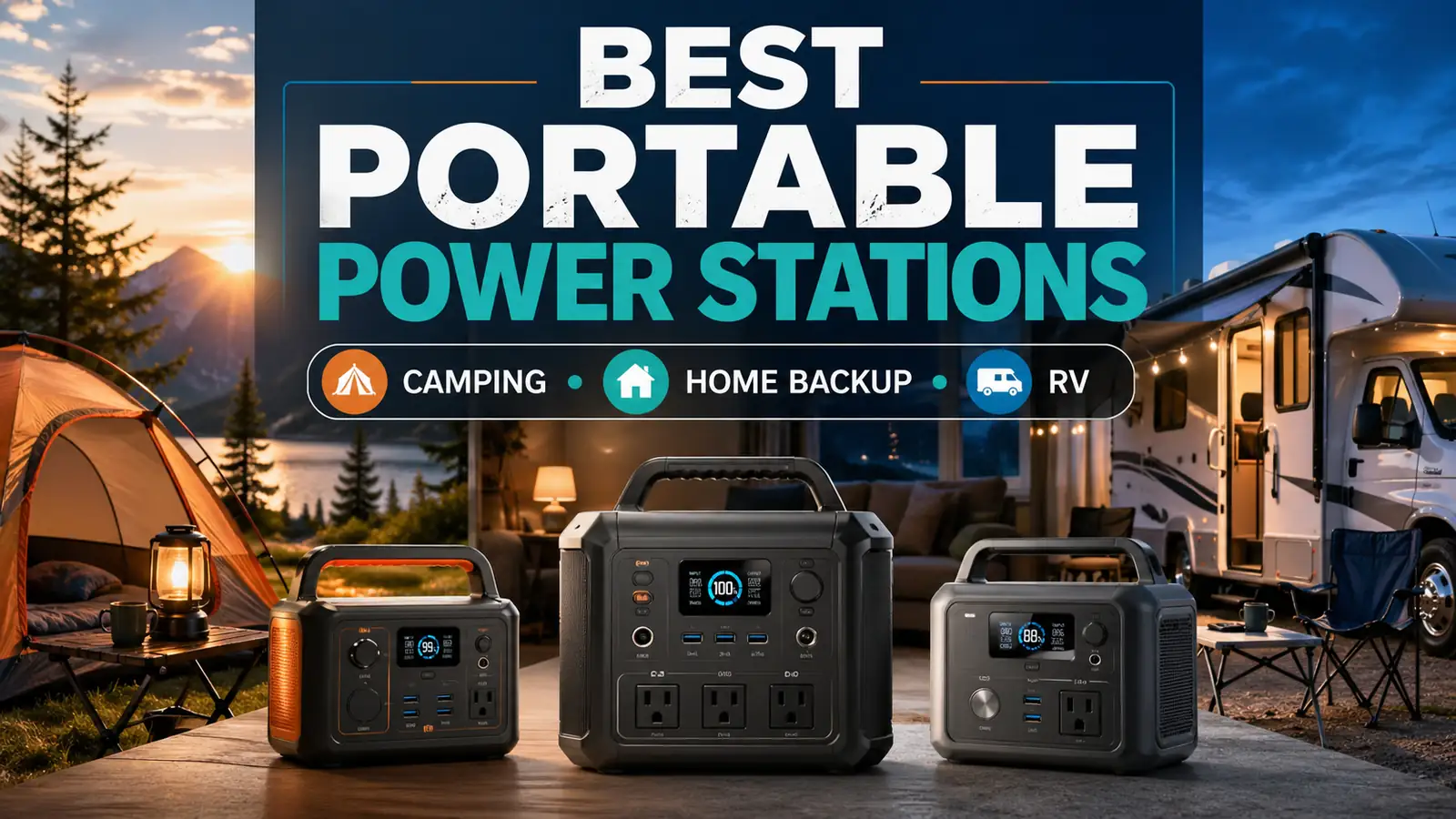
A portable power station is one of the easiest ways to get clean, quiet backup electricity without dealing with gasoline, fumes, or the noise of a traditional generator. For many buyers, the real challenge is not understanding what the product is. The challenge is choosing the right size, battery type, and use-case fit so the unit actually powers the devices that matter.
The best portable power station for one person may be completely wrong for another. A camper usually needs light weight, simple recharging, and enough capacity for phones, lights, and maybe a small fan. A home-backup buyer cares more about runtime, higher output, and the ability to keep essentials like a router, lights, and a fridge supported during an outage. A CPAP user needs quiet overnight performance and stable power quality. An RV buyer may need more ports, more charging flexibility, and a bigger battery window.
This hub page is designed to help you make that decision fast. It explains what a portable power station is, how to think about watt-hours and output, what battery chemistry matters most, and which capacity tier usually makes sense for each use case. From here, you can move into the deeper supporting pages for sizing, runtime math, camping, home backup, CPAP, RV use, and generator comparisons.
If you want the fastest next step, start with what size portable power station you need,
What Is a Portable Power Station?
A portable power station is a rechargeable battery system with built-in inverters, charging controls, and output ports that let you run electronics and small-to-medium appliances away from the wall. In practical terms, it is a stored-power device that can be charged from AC power, car charging, or solar panels, then used later when you need electricity on demand.
Most buyers should think of a portable power station as a bridge between small power banks and full fuel generators. It is much more capable than a USB battery pack, but it is usually more limited than a gas generator when very high-wattage loads or long whole-home backup are involved. Its biggest advantages are clean indoor-safe operation, low noise, portability, and simple setup.
The three numbers that matter first are capacity, output, and recharge speed. Capacity tells you how much energy is stored. Output tells you how much power the unit can deliver at once. Recharge speed tells you how quickly the battery can be topped back up. Once those three match your real devices, the rest of the shopping process becomes much easier.
How to Choose the Right Portable Power Station
The right unit is almost never the one with the biggest number on the product page. It is the unit that matches your device load, expected runtime, recharge method, and how often you plan to move it. The framework below keeps the decision practical.
Capacity vs Output
Capacity is usually measured in watt-hours. Output is usually measured in watts. Capacity answers the question, “How long can this run?” Output answers the question, “Can this start and power my device at all?” A 300Wh station might run small electronics for a while, but it will not behave like a 2000Wh unit during a home outage. In the same way, a station with enough stored energy can still fail your use case if its continuous output is too low for the appliance you want to run.
For small devices, buyers often overestimate the output they need and underestimate runtime. For larger use cases, the opposite happens. Someone shopping for camping lights, phones, cameras, and laptops often needs more battery capacity planning than raw power. Someone shopping for kettles, microwaves, coffee makers, or more demanding appliances has to respect output limits first.
A simple tier view helps:
| Tier | Typical Capacity | Best For | Not Ideal For |
| Small | 200–500Wh | Phones, laptops, lights, cameras, light camping kits | Long outages or appliance-heavy use |
| Mid | 500–1000Wh | Weekend camping, routers, fans, CPAP-friendly setups, small backup loads | Large appliances or multi-day heavy backup |
| Upper Mid | 1000–1500Wh | Better all-rounder for camping, apartment backup, and mixed essentials | Serious full-home backup |
| Large | 1500–2500Wh+ | Home backup, RV use, larger loads, longer runtime | Buyers who need maximum portability |
Runtime and What It Can Power
Runtime depends on both battery size and device draw. That sounds obvious, but it is where most bad purchases happen. A portable power station may look powerful because of a high output rating, yet still deliver disappointing runtime if the capacity is too small. On the other hand, a higher-capacity unit may feel expensive until you compare how many device-hours it really buys you during outages or trips.
For rough planning, use simple device math. Phones and LED lights are usually easy loads. Laptops, routers, fans, and CPAP machines sit in the middle. Coffee makers, hot plates, kettles, microwaves, and some refrigerators can change the buying equation quickly. Startup surges also matter for some appliances, so treating the product page as a system-matching exercise is safer than guessing from marketing alone.
Use approximate runtime as a screening tool, not a guaranteed promise:
| Device | Typical Draw | 500Wh Unit | 1000Wh Unit | 2000Wh Unit |
| Phone charging | 10–15Wh per charge | Many charges | Many more charges | Usually not the limiting factor |
| Laptop | 50–100W | Several hours | A workday range | Extended use |
| Wi‑Fi router | 10–20W | Long runtime | Very long runtime | Outage-friendly |
| CPAP | Varies by setup | May cover one night | Often more comfortable | Best for longer buffer |
| Mini fridge / fridge | Varies widely | Case dependent | Possible for essentials | More realistic backup window |
For detailed load planning, go straight to how long a portable power station will run.
Battery Chemistry: LiFePO4 vs Lithium-Ion
Battery chemistry affects longevity, safety profile, weight, and long-term value. In the current market, many buyers now prefer LiFePO4 because it usually delivers stronger cycle life and a more confidence-inspiring ownership profile for frequent use. That matters for home backup buyers, RV users, and anyone who plans to charge and discharge the unit regularly over time.
Traditional lithium-ion options can still make sense when portability, smaller size, or price position are more important than maximum lifespan. The correct choice depends on how hard the unit will be used. A light-duty camping buyer who uses the station occasionally may evaluate battery chemistry differently from someone building a repeat-use backup system.
If battery chemistry is one of your deciding factors, read LiFePO4 vs lithium-ion portable power stations before comparing product pages side by side.
Charging Speed and Solar Input
Charging speed changes the ownership experience more than many buyers expect. A station that recharges quickly from the wall is easier to live with before storms, between trips, or after an overnight session. Solar input matters most when you actually plan to extend runtime in the field rather than treating solar as a nice extra.
Buyers should not judge solar only by the words ‘solar compatible.’ Input limits, real charging conditions, panel size, weather, and the number of daylight hours all change the result. Fast AC charging is usually the first convenience feature. Well-matched solar charging becomes the second layer of value.
If off-grid charging matters, continue to the solar charging guide for portable power stations.
Best Portable Power Stations by Use Case
The easiest way to narrow the market is to decide what job the station must perform first. Buying by use case reduces specification noise and makes the right capacity range clearer.
Best for Camping
Camping buyers usually win by staying practical. Lightweight units with enough battery for lights, phones, small fans, cameras, and occasional laptop charging are often better than oversized systems that become annoying to move. Fast recharging also matters because a unit that is simple to refill between outings is easier to rely on.
For camping, prioritize portability, usable ports, lighting support, simple setup, and enough runtime for the trip length you actually take. A smaller, well-matched unit often beats a larger system that you regret carrying.
For the camping-specific shortlist, see best portable power stations for camping.
Best for Home Backup
Home-backup buyers need to decide whether they are protecting comfort items or essential circuits. There is a major difference between keeping phones, lights, a router, and a few electronics alive versus trying to support refrigeration, kitchen gear, or long outage windows. That difference usually pushes capacity upward very quickly.
For outage use, capacity, output headroom, and recharge planning matter more than pure portability. A slightly heavier unit with better battery chemistry and stronger output is often the more rational buy for this category.
For deeper outage planning, open best portable power stations for home backup.
Best for CPAP
CPAP buyers should be especially careful not to shop by generic marketing alone. This use case values quiet operation, stable power delivery, and realistic overnight runtime more than flashy feature counts. Setup details such as heated humidifiers and pressure settings can materially change runtime expectations, so leaving some safety margin is smart.
Because this is a nighttime health-adjacent use case, the safest purchase is usually the one that feels boringly dependable rather than aggressively overpromised.
For the overnight-runtime angle, go to best portable power stations for CPAP.
Best for RV
RV buyers usually sit between camping simplicity and home-backup expectations. They often want better capacity, more port variety, more charging flexibility, and a system that feels realistic for repeated travel use. Weight still matters, but the buying framework becomes less about minimalism and more about flexible utility.
In RV applications, output, recharge pathways, expansion potential, and how the station fits the broader electrical setup should all be considered together.
For that lane, continue with best portable power stations for RV.
Best for Apartment Backup
Apartment buyers often choose portable power stations because gas generators are impractical, noisy, or unsafe for indoor living situations. That makes battery backup more attractive for urban use. The ideal unit here is usually quiet, fume-free, easy to store, and large enough to support a tight set of essentials during outages.
This category rewards realistic expectations. A well-chosen mid-range station can provide valuable outage resilience without trying to imitate a full-house generator.
